• Program Information

    Program Code: 0331

    Fall Start (September)
    CIP Code: 15.1201 (PGWP eligible)

    The Embedded Systems graduate certificate program provides electrical and electronic engineering graduates with hands-on opportunities to acquire knowledge and skills that will permit them to work effectively in embedded systems product and device development.

    Topics covered range from computer software and industrial control systems to health and safety and quality assurance. The program integrates a hands-on, practical approach to learning, augmenting the theoretical knowledge that graduate engineers already have. Applied projects and lab work help prepare graduates for a technical career in embedded systems product development and related fields. The program also includes entrepreneurship and communication courses that help build the ‘softer skills’ sought by employers in the industry.

Available courses

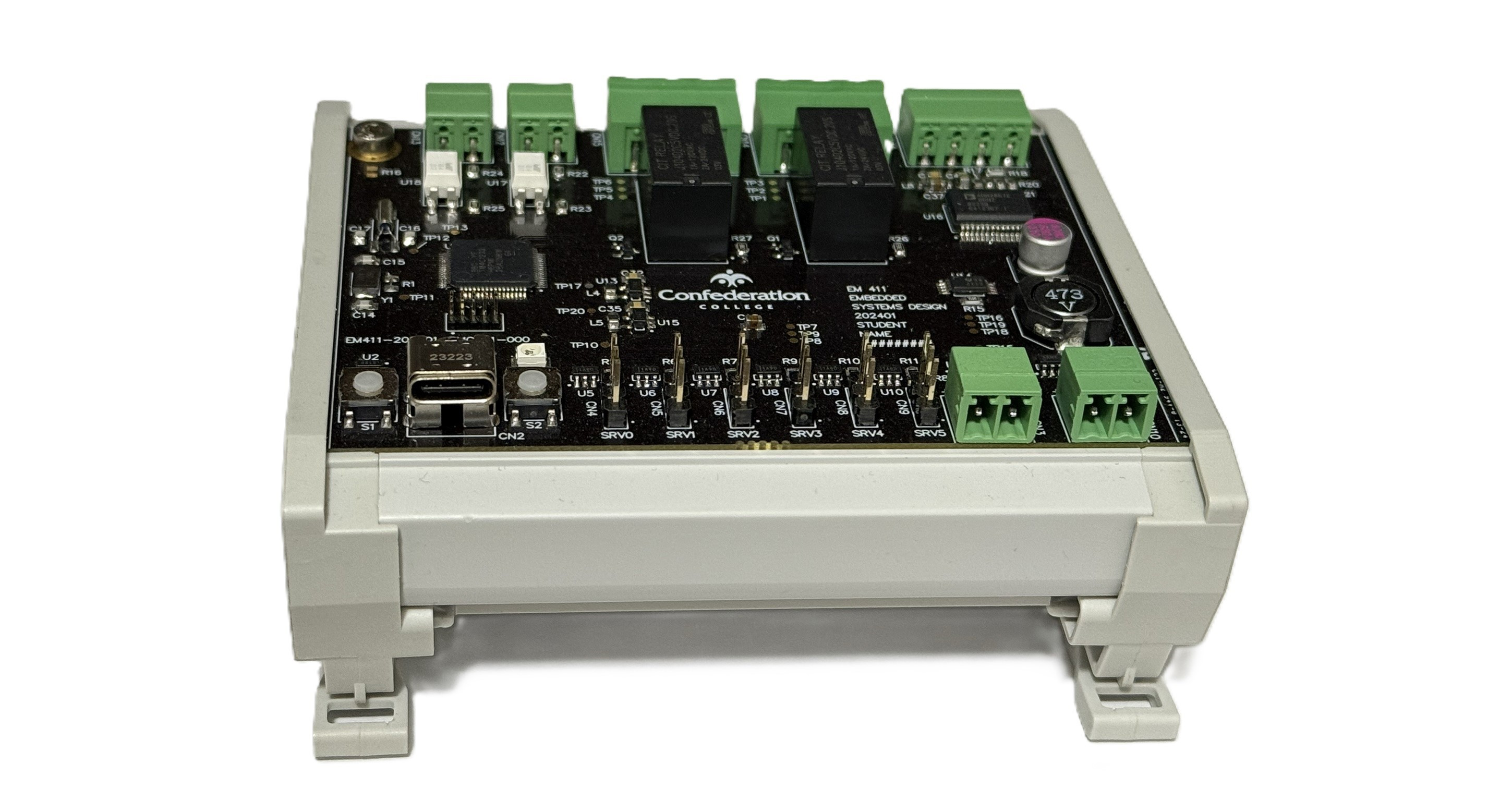
Students will study PCB features and design a board-level embedded system incorporating an Arm Cortex-M4F microcontroller. Project management techniques for engineering will be introduced that will include creating a work breakdown structure for development, manufacturing, and prototype presentation. Professional level CAD/CAM design tools will be used to design a prototype circuit board in-house which will be assembled by the student to help refine prototype and rework skills. An in-class presentation will allow the student to demonstrate the operation of their embedded system to their peers. Students will also be required to submit technical documentation and fabrication/assembly files for production.

This course examines the structure and application of real-time operating systems (RTOS) in embedded systems. Students explore methods of achieving concurrency, including multithreading models, context switching, and synchronization mechanisms such as semaphores, mutexes, and spin locks. The course addresses scheduling techniques, thread states, and challenges such as priority inversion and resource starvation, along with industry-standard solutions. Learners investigate memory management strategies, including static and dynamic allocation, memory pooling, and shared memory. Emphasis is placed on preparing and deploying an RTOS by configuring hardware resources, exploring APIs, and integrating driver libraries. Through a major project, students design, implement, and evaluate a working embedded system employing a real-time operating system.

This course offers an in-depth exploration into the design and development of robust embedded firmware systems, with a strong emphasis on real-world applications and industry-relevant tools. Students will gain hands-on experience working with vendor-specific driver libraries such as Texas Instruments' TivaWare SDK and Arm's Cortex Microcontroller Software Interface Standard (CMSIS) to build efficient, low-level device drivers and middleware. The course delves into the critical architecture and implementation of bootloaders, enabling secure and reliable firmware updates. Additionally, students will explore the intersection of embedded systems and the Internet of Things (IoT), developing connected applications using MQTT protocol over WiFi to enable lightweight, scalable communication between devices. By the end of the course, students will have engineered end-to-end embedded solutions, equipping them with the skills to navigate complex firmware ecosystems in modern connected systems.

This course introduces the student to VHDL (VHSIC (Very High Speed Integrated Circuit) Hardware Description Language) and applications with a Field-Programmable Gate Array (FPGA). Students will focus on design synthesis to implement basic combinational and sequential logic operations including more advanced topics such as signal decoding and state machine applications. FPGA functional and post-route timing simulation is studied to verify timing and assist during development. Asynchronous external interfacing topics are discussed and implemented to provide students with solutions to many common challenges in FPGA design.

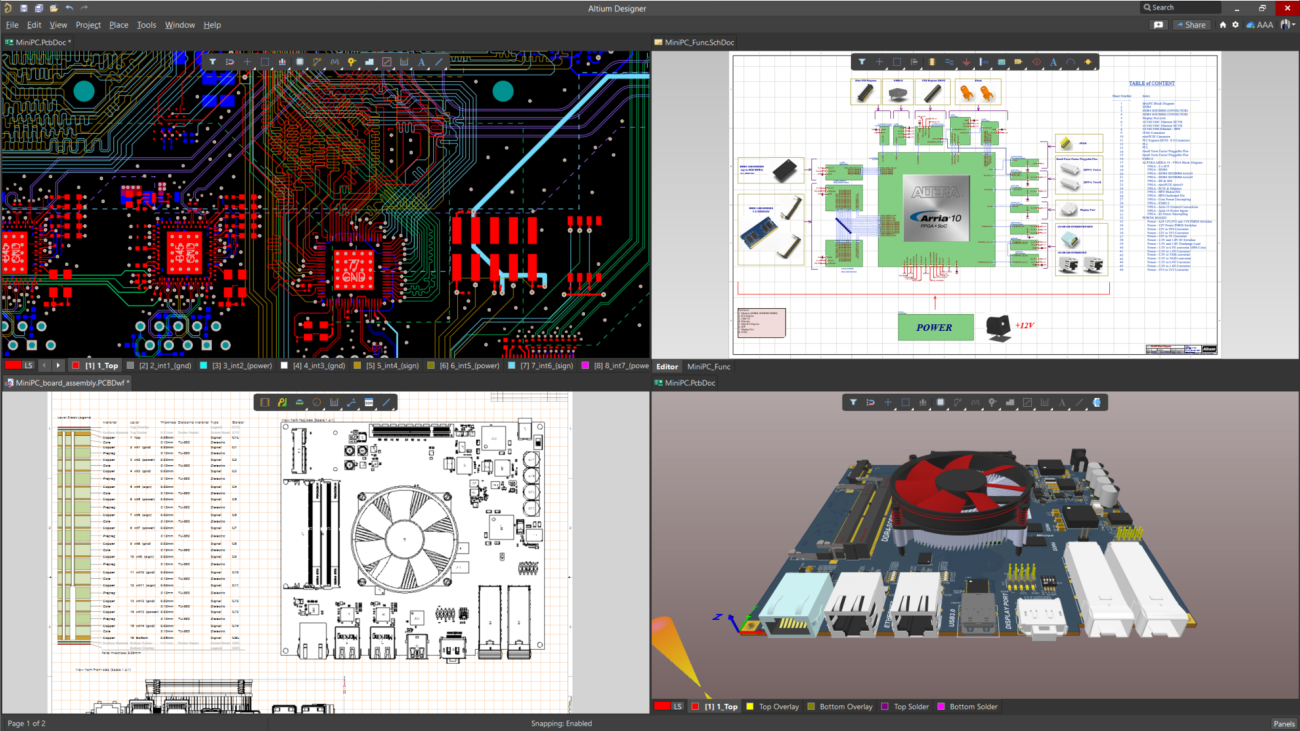
The student is provided with a foundation in the theory of PCB (Printed Circuit Board) design. An analysis of part functionality, availability, and cost is presented to improve the selection of components for use in a design. Concepts of schematic design are studied to effectively convey the operation of electronics circuits while supporting a framework for use by industry-standard EDA (Electronic Design Automation) tools. The physical realization of electronics design is explored following IPC (Institute for Printed Circuits) standards and best practices. The analog effects of digital signals are considered along with the relationship between voltage, current, impedance, and frequency. Thermal effects and noise will also be examined to help ensure students gain the knowledge needed for employment in a variety of PCB design areas.

Students apply the practical aspects of PCB (Printed Circuit Board) design from theory learned in EM 416. Industry-standard EDA (Electronic Design Automation) tools are used for schematic design/capture including BOM (Bill of Material) generation, and the use and design of custom component libraries. A study of schematic flow and segmentation along with functional circuit simulation prepares the student to move on to the second part of the course in PCB layout. The physical realization of electronics design is studied following IPC (Institute for Printed Circuits) standards and best practices. IBIS (I/O Buffer Information Specification) models will be used to show effects of components and PCB layout features on signal integrity. The relationship between schematics and the PCB layout is applied using design directives for voltage, current, impedance, and frequency requirements. PCB layout challenges and solutions are presented including thermal transfer, noise reduction for EMC (Electromagnetic Compatibility), manufacturability, and cost reduction.

Tutorials and information